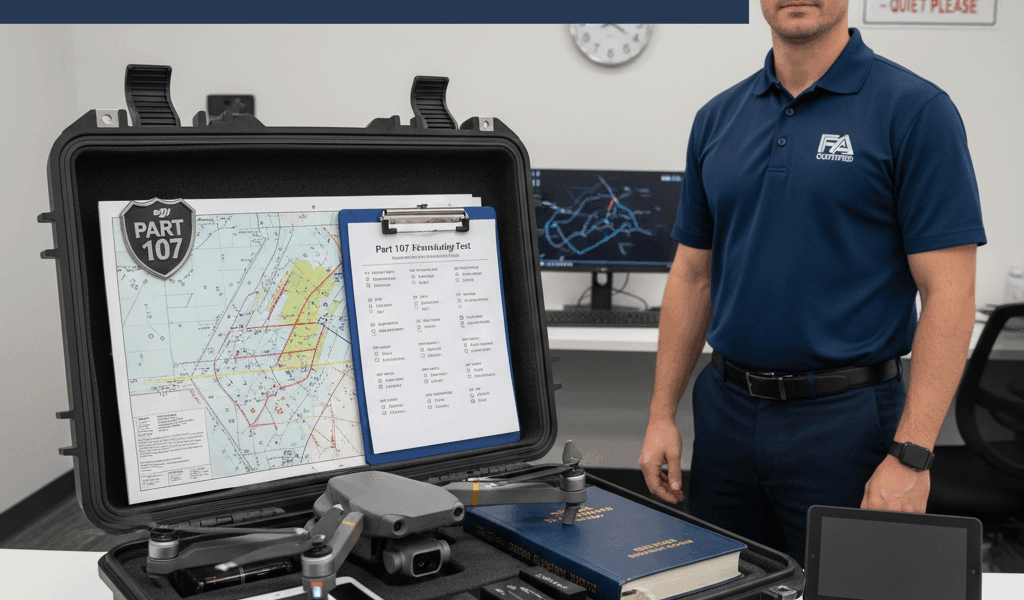
Test day nerves are real, but knowing what to expect makes everything easier. I walked into my testing center not entirely sure what I was supposed to have. Here’s what I wish someone had told me.
What You Actually Need to Bring
Your government-issued photo ID is non-negotiable. Driver’s license, passport, or military ID all work. The name must match what you used when scheduling the exam. Any discrepancy and they might not let you test.
That’s actually the only thing you must bring. Everything else—scratch paper, calculator, sectional chart supplement—is provided at the testing center. Leave your phone, smartwatch, and any electronics in your car or in the lockers they provide.
The Check-In Process
Plan to arrive 15 to 20 minutes early. You’ll check in at the front desk, show your ID, read through some testing conduct rules, and store your stuff in a locker. Some centers photograph you or scan your palm for identity verification.
Staff will walk you to your testing station and log you into the exam system. They’ll explain how to flag questions for review, how to navigate, and how to submit when finished. Take a breath and you’re ready to start.
During the Test
You’ve got two hours for 60 multiple-choice questions. The computer interface is straightforward—click your answer and move to the next question. A timer displays your remaining time, and you can see which questions you’ve flagged for review.
If you need scratch paper, raise your hand. The proctor will bring you more. Same for bathroom breaks, though the clock keeps running.
Getting Your Results
When you finish and submit, your score appears almost immediately. The screen tells you whether you passed or failed and breaks down your performance by knowledge area. You get a printed score report on your way out.
Passing feels incredible. Failing is disappointing but not the end. Either way, you walk out knowing exactly where you stand.