Two weeks isn’t a lot of time, but if you focus on what matters, you can go from zero to test-ready. I’ve seen people cram in a weekend and pass, but two weeks gives you breathing room to actually retain what you learn.

Week One: Build Your Foundation
Days 1-2 cover regulations. These form the backbone of exam questions. Learn the operating limitations, pilot requirements, and what you can and can’t do under Part 107. This is mostly memorization.
Days 3-4 tackle airspace. Understanding Class B through G airspace and when you need authorization sounds complicated but follows a logical pattern. Draw the airspace structure on paper until it clicks.
Days 5-7 focus on weather. Aviation weather reporting takes practice. Spend time reading actual METARs and TAFs until the codes become second nature. Understand how temperature, humidity, and altitude interact.
Week Two: Apply and Practice
Days 8-9 cover operations and emergency procedures. These questions are often scenario-based, asking what you’d do in specific situations. Think through the reasoning, not just the correct answer.
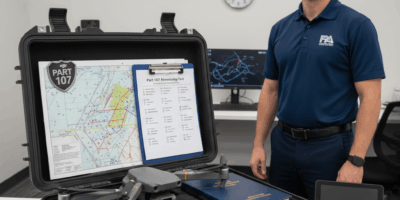
Days 10-11 are for sectional chart practice. Actually work with charts. Identify airspace boundaries, locate airports, find obstacles. The test provides a chart excerpt, so familiarity matters.
Days 12-14 are practice test days. Take full 60-question practice exams under timed conditions. After each one, review every question you missed and understand why. Aim for scores in the high 80s before scheduling your real test.
Daily Study Approach
Two to three hours daily works for most people. Longer sessions hit diminishing returns fast. Take breaks, switch topics when you get bored, and quiz yourself constantly.
Don’t just read passively. Write things down, explain concepts out loud, teach someone else. Active studying crushes highlighting and re-reading every time.