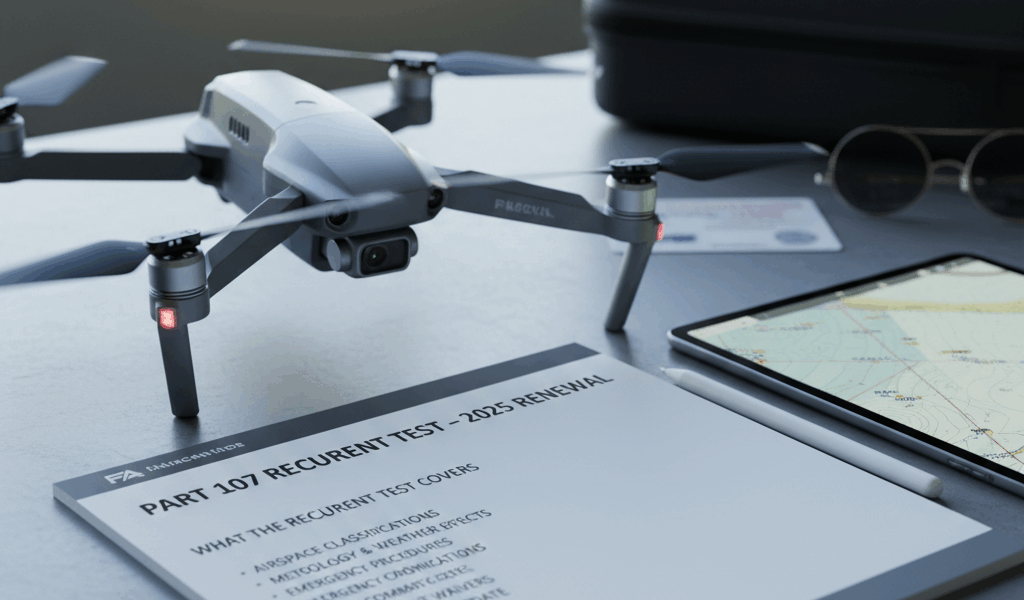
Your Part 107 certificate doesn’t expire, but your authorization to fly commercially does—every 24 months. To keep flying legally, you’ll need to complete recurrent training. Here’s what that actually looks like.

Why This Training Exists
Drone regulations change faster than most aviation rules. Over the past few years alone, we’ve gotten remote ID mandates, LAANC updates, and new night operations requirements. The FAA needs active commercial pilots staying current with these shifts.
The recurrent course hits regulatory changes from the last two years and reinforces safety fundamentals that matter when you’re actually flying. It’s not as demanding as the initial test, but it’s more than rubber-stamping your renewal.
What You’ll Actually Study
Expect airspace classification reviews, weather decision-making scenarios, and operational limits. The course also covers whatever new regs took effect during your certification period.
If you’re renewing in 2025, that means remote ID compliance, the revised operations over people categories, and LAANC system changes. The content adapts based on what the FAA rolled out since your last renewal.
How to Get It Done
The FAA provides free recurrent training through FAASafety.gov. Log in with your FAA account, locate the Part 107 small UAS recurrent training course, and work through it whenever you have time. Most pilots finish within an hour or two.
After completion, your certification records update automatically. You can print a completion certificate if you want documentation, and your operating privileges extend another 24 months from that completion date.
Don’t Let It Expire
Operating commercially with lapsed privileges is a violation. Set a reminder for two months before your expiration. The training is free and takes an hour—there’s no excuse for letting it slide.