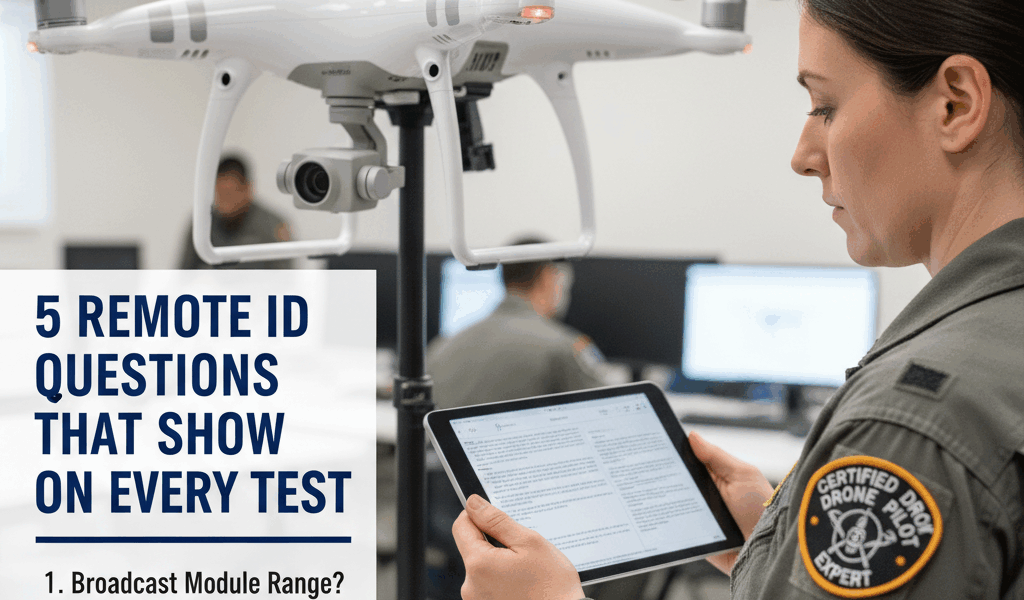
5 Remote ID Questions That Show Up on Every Test

What is Remote ID and Why Is It Required?

Remote Identification (Remote ID) is often called the “digital license plate” for drones. It’s a system that broadcasts identification and location information from your unmanned aircraft during flight. The FAA implemented this requirement to address safety and security concerns as drone operations become increasingly common in the National Airspace System (NAS).

Remote ID allows the FAA, law enforcement, and federal security agencies to identify drones flying in their jurisdiction. This capability is essential for maintaining airspace safety, especially as drone traffic increases near airports, stadiums, and other sensitive areas. For Part 107 test takers, understanding Remote ID requirements has become a critical topic area.

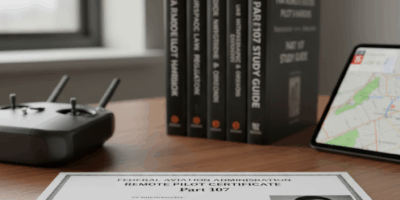
Drone Controller with Remote ID capability

Types of Remote ID Compliance

UAS drone operations

There are three ways to comply with Remote ID requirements:

Standard Remote ID: This is built into newer drones manufactured after September 16, 2022. These aircraft have integrated Remote ID capability that automatically broadcasts required information during flight. Most commercial drones from major manufacturers now include this feature.

Remote ID Broadcast Modules: For drones without built-in Remote ID, pilots can attach an external broadcast module. These devices connect to the drone and transmit the required identification information. This option allows older aircraft to remain compliant.

FAA-Recognized Identification Areas (FRIAs): Drones without Remote ID capability can still fly within designated FRIAs. These are specific geographic areas, typically established by community-based organizations or educational institutions, where Remote ID is not required.

What Information Does Remote ID Broadcast?

Remote ID broadcasts the following information:

  • Drone identification (serial number or session ID)
  • Drone latitude, longitude, and altitude
  • Drone velocity
  • Control station latitude, longitude, and altitude
  • Time mark
  • Emergency status indication

This information is broadcast via radio frequency and can be received by anyone with appropriate receiver equipment within range. The FAA does not require pilots to transmit personal information like name or address through Remote ID.

Compliance Deadlines and Requirements

Key dates every Part 107 pilot should know:

  • April 21, 2021: Remote ID rule published
  • September 16, 2022: All drone manufacturers must produce Remote ID-equipped drones
  • March 16, 2024: Full compliance required – all drone pilots must use Remote ID or fly in FRIAs

Operating without Remote ID compliance after the deadline can result in enforcement action, including certificate suspension or civil penalties.

Exemptions and Exceptions

Drone technology

Several situations allow operation without Remote ID:

  • Flying within an FAA-Recognized Identification Area (FRIA)
  • Operations conducted under specific FAA-issued waivers or exemptions
  • Aircraft weighing 0.55 pounds (250 grams) or less when flying exclusively under the Exception for Limited Recreational Operations

Note that Part 107 commercial operations cannot use the recreational exception, so most commercial pilots must comply with standard Remote ID requirements.

Test Questions Focus Areas for Remote ID

The Part 107 knowledge test includes questions about Remote ID covering these key concepts:

Recognition of compliance methods: Expect questions asking you to identify the three ways to comply with Remote ID requirements (Standard Remote ID, broadcast modules, and FRIAs).

Broadcast information: Questions may ask what information Remote ID transmits and what information it does NOT transmit (such as pilot personal details).

Compliance requirements: Know when Remote ID is required and understand the exceptions for FRIAs and small recreational drones.

Equipment requirements: Understand what makes a drone “Remote ID equipped” and how broadcast modules function as an alternative.

How to Prepare for Remote ID Test Questions

To succeed on Remote ID questions:

  1. Study 14 CFR Part 89: This is the regulation governing Remote ID requirements. Focus on the definitions, compliance options, and broadcast requirements.
  2. Review FAA guidance documents: The FAA has published extensive guidance on Remote ID implementation that clarifies regulatory requirements.
  3. Practice scenario-based questions: Many test questions present situations where you must determine if Remote ID is required or which compliance method applies.
  4. Understand the timeline: Know the key dates and current enforcement status of Remote ID requirements.

Remote ID represents a significant evolution in drone regulations. Mastering this topic not only helps you pass the Part 107 test but also ensures you operate legally and safely as a commercial drone pilot.

Jason Michael

Jason Michael

Author & Expert

Jason Michael is a Pacific Northwest gardening enthusiast and longtime homeowner in the Seattle area. He enjoys growing vegetables, cultivating native plants, and experimenting with sustainable gardening practices suited to the region's unique climate.

31 Articles
View All Posts

Subscribe for Updates

Get the latest articles delivered to your inbox.