What You Need to Know About Night Flying Rules

Part 107 Night Flight Requirements Overview

Night operations represent one of the most significant changes to Part 107 regulations in recent years. Originally, flying at night required obtaining a waiver from the FAA. However, as of April 21, 2021, remote pilots can conduct night operations without a waiver, provided they meet specific training and equipment requirements. Understanding these rules is essential for both passing the Part 107 knowledge test and conducting safe commercial drone operations.

Night is defined as the time between the end of evening civil twilight and the beginning of morning civil twilight. Civil twilight occurs when the sun is 6 degrees below the horizon. During this period, specific anti-collision lighting requirements must be met for legal drone operations.

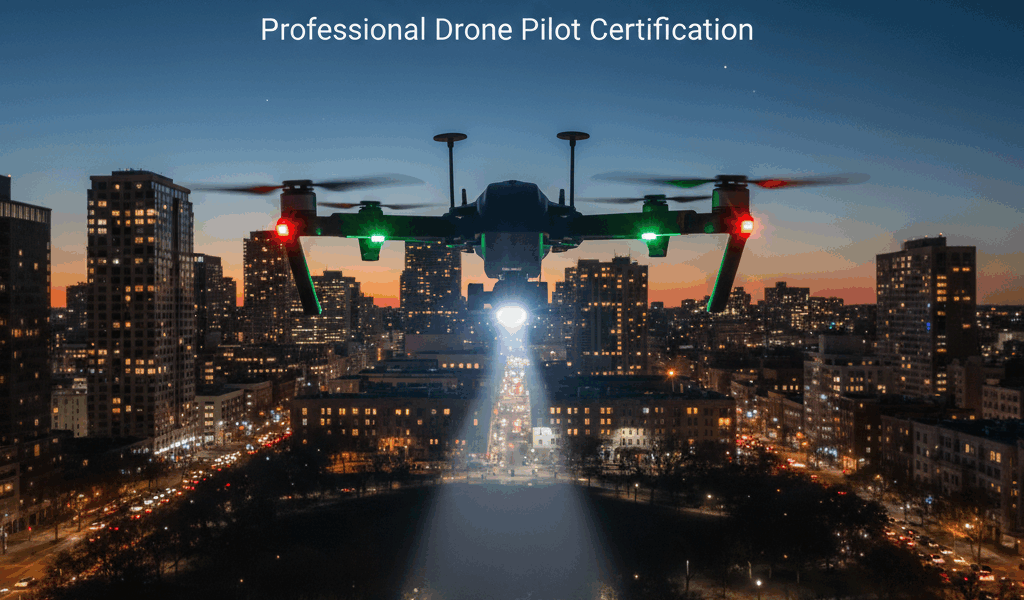
Drone flying with anti-collision lights

Anti-Collision Lighting Specifications

UAS drone operations

The FAA requires that drones operating at night have lighted anti-collision lights visible for at least 3 statute miles. This is the critical specification that appears frequently on Part 107 test questions.

Key lighting requirements include:

  • Visibility distance: Anti-collision lights must be visible for at least 3 statute miles
  • Flash rate: Lights should have a flash rate sufficient to avoid collision (strobe lights are commonly used)
  • Operational requirement: Lights must be operational from the beginning of evening civil twilight through the end of morning civil twilight
  • Reduced intensity option: Pilots may reduce light intensity if it would interfere with the operation, but lights must still be visible for 3 statute miles in clear conditions

The 3 statute mile visibility requirement is measured in conditions of no moon and clear skies. This specification ensures other aircraft and people on the ground can see your drone from a safe distance.

Waiver Requirements History

Prior to April 21, 2021, all night operations required a Part 107 waiver under Section 107.29. The waiver process involved:

  • Submitting an application through the FAA DroneZone
  • Demonstrating how the operation could be conducted safely
  • Describing lighting equipment and procedures
  • Waiting 90+ days for approval

The 2021 rule change eliminated the waiver requirement for most night operations, significantly expanding commercial drone capabilities. However, pilots must now complete specific training to qualify.

Online Training Requirements

To operate at night without a waiver, Part 107 pilots must complete updated initial or recurrent training. This training is available through the FAA’s online system at FAASafety.gov.

For new applicants: The initial Part 107 knowledge test now includes night operations content. Passing the test demonstrates proficiency in night operations requirements.

For existing certificate holders: Remote pilots who obtained their certificate before the rule change must complete the updated online recurrent training that includes night operations content, OR pass the recurrent knowledge test that covers night operations.

The training covers topics including:

  • Physiological effects of night flight on vision
  • Illusions that occur during night operations
  • Anti-collision lighting requirements
  • Night-specific flight planning considerations

Visual Observer Requirements at Night

Drone technology

Visual observers are not required for night operations under Part 107, but if you choose to use one, they must meet specific criteria:

  • Must be able to see the unmanned aircraft throughout the entire flight
  • Must be positioned to maintain effective communication with the remote pilot
  • Must be able to scan the airspace for potential hazards

Using a visual observer at night can enhance safety by providing additional situational awareness. The observer can help monitor for other aircraft while the remote pilot focuses on controlling the drone.

Common Test Question Topics

Part 107 night operations questions typically focus on these areas:

Lighting specifications: Expect questions asking about the 3 statute mile visibility requirement. This is one of the most commonly tested specifications.

Definition of night: Questions may ask when night operations rules apply, requiring knowledge of civil twilight definitions.

Training requirements: Know what training or testing is required to conduct night operations legally.

Scenario-based questions: You may encounter scenarios asking whether a particular operation requires night operations compliance based on timing and lighting conditions.

Physiological factors: Questions about how night conditions affect pilot vision and situational awareness are common.

Preparing for Night Operations Questions

To succeed on night operations test questions:

  1. Memorize the 3 statute mile lighting requirement: This specification appears in multiple question formats.
  2. Understand civil twilight: Know that night begins at the end of evening civil twilight and ends at the beginning of morning civil twilight.
  3. Review physiological factors: Night vision limitations, light adaptation time, and visual illusions are testable topics.
  4. Know the training pathway: Understand how new and existing pilots qualify for night operations.

Night operations capability significantly expands commercial drone applications, from real estate photography during evening hours to emergency response operations. Mastering these regulations prepares you for both the knowledge test and real-world commercial operations.

Jason Michael

Jason Michael

Author & Expert

Jason Michael is a Pacific Northwest gardening enthusiast and longtime homeowner in the Seattle area. He enjoys growing vegetables, cultivating native plants, and experimenting with sustainable gardening practices suited to the region's unique climate.

31 Articles
View All Posts

Subscribe for Updates

Get the latest articles delivered to your inbox.