Maintenance logbook questions on the Part 107 exam have gotten complicated with all the edge cases flying around. As someone who didn’t even know drones needed maintenance records before studying for this test, I learned everything there is to know about what the FAA expects from commercial operators. Today, I will share it all with you.

These questions throw some people off because hobbyist drone pilots rarely keep formal records. But the Part 107 exam expects you to understand what documentation commercial operators should maintain and why it matters.
What Logbooks Should Track
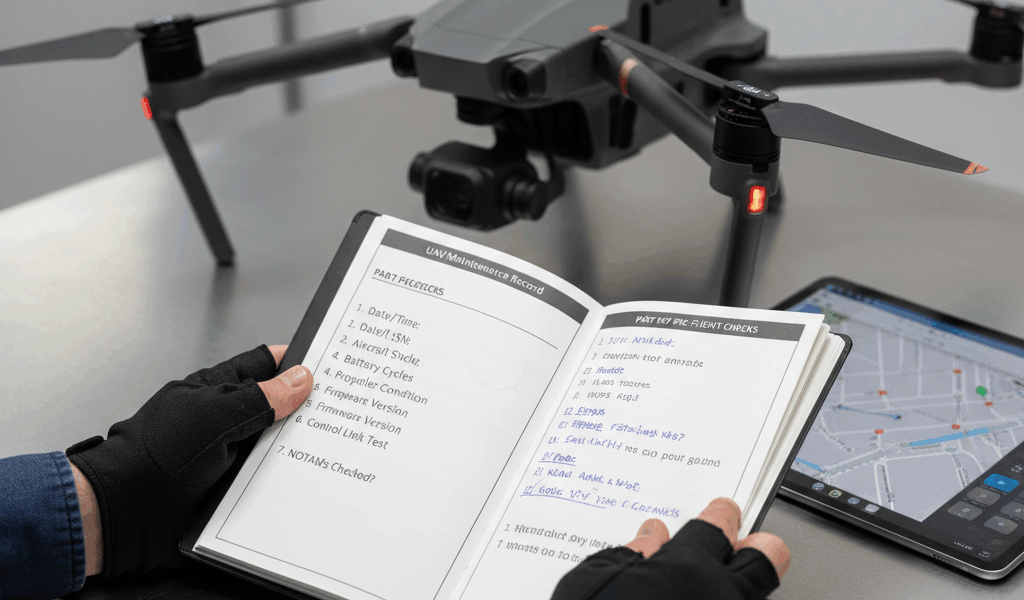
A maintenance log records inspections, repairs, and component replacements. When a question asks what should be documented after replacing a motor, the answer involves date, action taken, flight time on the aircraft, and who performed the work.
This might feel like overkill for a small drone, but that’s what makes proper documentation endearing to us professional pilots – the FAA approaches commercial operations with the same mindset as manned aviation. Documentation creates accountability and helps troubleshoot problems later.
Inspection Intervals
Unlike manned aircraft with mandatory inspection schedules, Part 107 does not specify exact intervals for small UAS maintenance. But questions might present scenarios where you need to decide if an aircraft is airworthy based on when it was last inspected.
Probably should have led with this section, honestly – the safe answer is always to inspect before flight and document regularly. Waiting until something fails is not a maintenance strategy. I missed a question on this exact concept my first time through the practice tests.
Manufacturer Guidelines
Most commercial drones come with recommended maintenance schedules from the manufacturer. These include battery cycle limits, propeller replacement intervals, and firmware update requirements. Exam questions sometimes test whether you would follow these guidelines or ignore them.
When DJI says replace your props after 200 hours, there is engineering behind that number. Professional operators take those recommendations seriously.
What to Do With Records
Keep your logs somewhere accessible. If the FAA ever asks about your operations – whether for an investigation or just a routine check – being able to produce organized maintenance records shows you run a professional operation.
Digital logs work fine. Paper works too. The format matters less than the consistency of recording.